The Stages of Change in Addiction Recovery: Understanding the Journey
When someone is struggling with addiction and their life depends on their need to change, how can you help them? One way is to look at where they are on their journey. Understand that each person’s readiness for change is different, and change is not one swift action. It moves through stages, each with its own physical, emotional, and behavioral hurdles.
A Quick Look at the Stages of Change Model
The way we offer support matters. Looking at where your loved is can help you decide how to show up for them. In an example from my own recovery, a family intervention served no purpose when I had yet to acknowledge my problem, but by the time they did it again, I knew I needed help and was ready to listen.
The Five Stages of Change in Addiction Recovery

Precontemplation: When Someone Doesn’t Believe They Have a Substance Use Problem
The person doesn’t believe they have a problem, or they don’t see their substance use as a problem. Trying to get them to see it can increase resistance and defensiveness.
- Express concern about specific things you’ve seen that worry you.
- Observe and listen.
- Avoid debates, lectures, or labeling.
- Create healthy boundaries for yourself; communicate what you will and won’t do or accept.
- Let them know you care, and they can turn to you.
Even if someone isn’t ready to stop using substances or enter treatment, they may be willing to take smaller steps that reduce risk or improve their health and safety. These steps matter, too.
Contemplation: Recognizing a Problem but Feeling Unsure About Change
The person is beginning to acknowledge they may have a problem but is ambivalent about what to do next. This is an important time to listen more than you talk.
- Try not to jump into problem-solving mode.
- Ask curious, open-ended questions such as:
- “What do you like about it, and what don’t you like?”
- “What concerns you about what has been happening?”
- “What would you like your life to look like?”
Give the person space to explore their own reasons for considering change.
Preparation: Getting Ready to Take the Next Step Toward Recovery
The person is ready to do something. This is where a supporter can provide practical assistance. Help them navigate the next steps without taking over the process. This can mean:
- Helping them find treatment options
- Making a phone call together
- Looking into recovery supports
- Working to identify the next step(s).
Make the path easier without taking away the person’s right to make decisions about their own recovery.
Action: Actively Working Toward Recovery Goals
The person is putting their plan into place and actively working toward their recovery goals.
- Support the process without trying to manage it.
- Recognize progress.
- Encourage healthy routines.
Be patient with the fact that recovery involves change in many areas of life, and those changes do not happen overnight. A helpful approach is to ask what kind of support is helpful rather than assuming you know.
Maintenance: Building Long-Term Recovery and Healthy Habits
The person is working to sustain the changes they have made and build a life that supports continued recovery.
- Celebrate progress without expecting perfection.
- Continue to maintain healthy boundaries.
- Encourage connection with treatment, recovery supports, healthy relationships, routines, and activities for as long as they remain helpful to the person.
Maintaining recovery does not mean someone will never struggle again. Challenges and changes in motivation can happen. A return to use doesn’t erase the progress a person has made. What matters is how they (and the people supporting them) respond.
Important Things to Remember About the Stages of Change
Safety Must Always Come First
Sometimes the situation requires immediate action (overdose or other medical emergencies, threats of suicide or harm to others, severe impairment, etc.). The priority shifts from encouraging readiness for change to protecting life and safety and getting appropriate help. You can respect someone’s dignity and autonomy while also recognizing when a situation has become an emergency.
Recovery Is Not a Linear Process
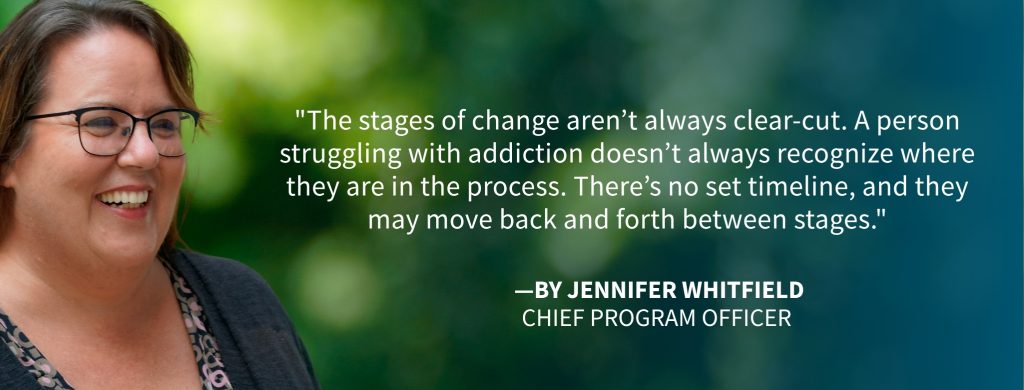
The stages of change aren’t always clear-cut. A person struggling with addiction doesn’t always recognize where they are in the process. There’s no set timeline, and they may move back and forth between stages.
See the Person Beyond the Addiction
Allow your loved one to grow into an identity beyond addiction. They’re more than “the person in recovery.” They are a parent, child, spouse, sibling, friend, employee, neighbor—and a person building a future.
You Need Support, Too
Caring about someone struggling with addiction takes an emotional toll. Finding your own source of support, whether formal or informal, can help you care for your well-being, maintain healthy boundaries, and be a more effective source of support for your loved one.
A Consistent Message of Hope and Support
“I love you. I’m concerned about you. And when you’re ready to take a step toward change, I’m here to help.”
NOTE: The descriptions and suggestions in this blog are intended as a general guide. The stages of change can provide a useful framework for thinking about what type of support may be most helpful at a particular time, but there is no single approach that will be right for every person or family.
HOW TO GET HELP:
If you or someone you know needs help, contact SouthLight. Here are 5 tips for talking to someone who may be struggling.

About Jennifer: Jennifer Whitfield, Chief Program Officer at SouthLight, is a Qualified Professional and Peer Support Specialist with a bachelor’s degree in psychology from Wake Forest University and nearly three decades of experience in behavioral health. She provides strategic and operational leadership across community-based, outpatient, crisis, care management, and substance use treatment programs.
Her professional expertise is strengthened by her own lived experience with substance use and mental health challenges. She is passionate about reducing barriers to care and combating stigma by openly sharing her story.
Start your recovery today.
We understand how hard it is to reach out for help. Our team is here to support you on your recovery journey. We will listen, empower, and advocate for everyone who walks through our doors.